
A mantra is not a row of words. It is a path a body makes through breath.
The mouth opens. Pressure rises from the chest. The tongue meets a precise region of the palate. A vowel lifts, holds, and falls. The next syllable inherits the air left by the first. Before meaning arrives, relation has already begun.
This is why a line can survive on paper and still be lost.
The letters may remain while the pitch collapses. The words may remain while duration leaks. A transcript can preserve every visible mark and carry none of the movement that made the line alive. Vedic recitation begins from the harder premise: if the sound matters, memory must live in bodies trained to make deviation audible.
That premise opens a larger architecture. Loka is the field in which something appears. Bhū is becoming dense enough to meet. Ākāra is the form that arrives. Akṣara is what the line refuses to let leak. Dhī is the faculty asked to remain awake while form moves through it.
The sequence is not a secret doctrine hidden inside the words. It is a way of placing them where they can illuminate one another.
The world is a clearing
Before a world becomes a globe, it is room.
Sanskrit loka can name free space, place, region, world, or the people who inhabit it. Its relation to √lok—to see, behold, perceive—keeps visibility close to the word. Jan Gonda’s study of Vedic loka returns repeatedly to open and valued space: room made available, a place where one can stand and move.
A container can be measured from outside. A clearing must be entered.
It has footing. It has obstruction. It has a horizon shaped by what the light can reach. The observer is not floating beyond it; the observer stands inside the conditions of appearance.
The Vedic phrase uruṃ lokaṃ kṛ- means to make a wide space. Width here is not decoration. Constriction reduces movement, relation, and sight. A wide field allows orientation. It gives the unknown somewhere to appear before a category closes around it.
A clearing is not empty. It is legible.
Every system creates such a field. A ritual creates one through sequence. An instrument creates one through sensitivity. A body creates one through its range of perception. A language model creates one through context. Fill the field with too much inherited form and the clearing becomes thicket. Nothing new can appear because everything has already been named.
Bhū is becoming under weight
The root √bhū means to be, become, arise. Pāṇini’s Aṣṭādhyāyī begins its technical designation of verbal roots with bhūvādayo dhātavaḥ: the roots beginning with bhū are called dhātus.
Grammar does not become cosmology merely because bhū stands first. The order still cuts cleanly: becoming is a verb before it hardens into a noun.
The Taittirīya Upaniṣad gives bhūr, bhuvaḥ, and suvaḥ as the three vyāhṛtis, then lets them resonate across several triads—this world, the intermediate region, the world beyond; fire, wind, sun; Ṛg, Sāma, Yajus; prāṇa, apāna, vyāna. One sound is not trapped at one scale. It gathers correspondences without collapsing them.
Bhūr names this world. √Bhū lets the ear hear what this world demands: becoming that has accepted consequence.
Bhūloka is where an idea acquires weight. A vow enters another person’s hearing. A memory alters a decision. A tool call touches a file, a calendar, a payment, a body. Possibility crosses into form and can no longer pretend it did nothing.
Bhū is the moment a pattern becomes answerable for its shape.
Form stands before us
Ākāra is form, figure, outward shape. Sākṣātkāra is immediate encounter: something brought before the eyes rather than held at the distance of inference.
Becoming takes form. Form enters a field. A witness meets it.
That is the whole movement, and the last step is where most systems fail.
Contact does not grant infallibility. It grants location. A quotation, an instrument reading, a remembered conversation, and a bodily sensation are all encounters, but they do not carry the same authority. Each arrives through a different aperture. Each leaves a different residue.
A map can bring the mountain into relation. It cannot replace the mountain. A diagnosis can organize signs. It cannot replace the body carrying them. A model can reveal a pattern. It cannot quietly inherit the authority of the field it describes.
The mistake begins when ākāra forgets that it is a shape.
Harsh Truths brings the experiencing subject back into this field in “Materialism is Baloney”:
Constant in those emotions—or in any experience—is “I”: the subject that is experiencing something.
Her essay, drawing on Mark Gober and idealist thinkers, places consciousness before matter. Here the encounter opens a distinction: the presence of experience and an explanation of its origin are different claims. The “I” is where a world is encountered. What that encounter tells us about the world’s ultimate substance remains a further question.
Steven A. Young approaches relation through another vocabulary. In the written introduction to “The Aether Conspiracy — How Science Conceals Spirit”, he describes aether as:
the one thing that ties together all other things.
Young proposes a unifying medium; Harsh places the subject at the beginning of inquiry. Loka lets this essay ask a third question: what conditions allow a relation to appear? A medium, an experiencing subject, and a field of appearance do different work. Their contact is productive because the words do not become interchangeable.
In this reading, the clearing is where connection becomes encounter. Dhī is the discernment that asks what the encounter permits us to conclude—and what it asks us to do. A cosmology can open the field. The witness must still meet what appears inside it.
Akṣara is the part that must not leak
Every carrier fails.
Air pressure dissipates. Ink fades. Servers corrupt. Teachers die. Students mishear. The body that speaks a line is kṣara: moving, perishing, spilling forward in time.
The word akṣara carries its answer inside the fracture. It can mean a letter or syllable. It can also mean imperishable. Patañjali’s Mahābhāṣya gives the familiar play: akṣara is what does not decay or flow away. The Bhagavad Gītā later places kṣara and akṣara across a larger philosophical divide. The Muṇḍaka Upaniṣad lets the world arise from the Imperishable; the Bṛhadāraṇyaka Upaniṣad describes space as woven upon it.
The spoken syllable is not physically immortal. It disappears almost as soon as it is made.
What endures is the demand for exact return.
A syllable crosses bodies, accents, generations, scripts, and rooms. No two utterances are acoustically identical. Yet a lineage can recognize whether the same ordered unit has returned. Imperishability enters practice as fidelity: not a substance that cannot decay, but a relation that refuses casual substitution.
Names belong here. Vows belong here. Source lines, constitutional limits, and facts whose alteration would change the act belong here.
Most memory systems preserve what something was about. The Vedic system begins lower and harder: preserve what was sounded closely enough that meaning can be argued again.
Gāyatrī moves the witness
Ṛgveda 3.62.10 carries the core verse:
tat savitur vareṇyaṃ bhargo devasya dhīmahi
dhiyo yo naḥ pracodayāt
The familiar oṃ bhūr bhuvaḥ svaḥ belongs to the later recitational frame, not to the wording of the Ṛgvedic verse. The distinction does not diminish the liturgical form. It lets each layer keep its own time.
In the recited sequence, Oṃ opens the field. The vyāhṛtis locate the body across earth, interval, and brightness. Then the ṛc turns toward Savitṛ—the impeller, the vivifying power—and asks that radiance to move the dhiyas.
Dhī is not classroom intelligence. It is the faculty of inspired thought, discernment, visionary apprehension: the capacity by which illumination becomes direction rather than spectacle.
The movement is exact:
- Name the field.
- Turn toward what illuminates it.
- Hold that radiance in dhī.
- Ask that the seeing faculty be driven forward.
The mantra does not ask for more symbols. It asks that seeing survive the symbol.
That is the force of dhīmahi. Hold the light. Do not immediately spend it as explanation. Do not let the first form become the final one. Then pracodayāt: let discernment move.
Illumination without direction is only brightness. Gāyatrī asks light to become conduct.
The voice draws the curve
Text can hold the syllables. Only a voice can reveal the path between them.
The Taittirīya Upaniṣad opens its lesson on śikṣā with six coordinated dimensions: varṇa, svara, mātrā, bala, sāma, santāna. Sound. Accent. Quantity. Force. Balance. Continuity.
None arrives alone.
The tongue does not place a consonant and add pitch afterward. Duration changes the room available to a vowel. Force alters the attack. The spectral shape of the mouth changes what the ear receives. The end of one syllable prepares the beginning of the next. Pronunciation is not a stack of settings. It is a moving geometry of constraints.
Vedic svara is primarily tonal, not a synonym for stress. The syllable is the tone-bearing unit in current phonological analysis. Udātta, anudātta, and svarita are relational events in a contour, not three buttons marked high, low, and middle. Their audible realization varies across textual and recitational traditions because a living line is transmitted through actual mouths, not through an abstract oscillator.
Now the curve can be written without pretending the writing is the curve. For the n-th syllable:
xₙ = (vₙ, pₙ(τ), dₙ, bₙ, sₙ(ω), jₙ)vₙ holds phonetic identity. pₙ(τ) traces relative fundamental frequency through the syllable. dₙ holds duration. bₙ marks articulatory force. sₙ(ω) carries spectral shape. jₙ records the junction into what follows.
The recitation is the trajectory through those states:
Γ(t) = Interp{x₁, x₂, …, xₙ}A microphone can measure pressure, frequency, energy, and time. It cannot inherit the ear of the teacher. The teacher knows which departures belong to a body and which departures break the line. Measurement gives the contour coordinates. Transmission gives them consequence.
Resonance is the return of relation
Resonance is not sameness.
The child, the elder, the low voice, and the high voice do not need one absolute pitch. They need the relations that let the line remain recognizable while passing through different bodies. What returns is not a frequency. It is an ordered proportion of rise, duration, placement, release, and continuation.
Let a teacher-approved rendering provide a reference state μₙ at each position. A new recitation produces xₙ. Their distance can be written as a weighted residual:
D = Σₙ wₙ · δ(xₙ, μₙ)The weights declare what the lineage listens for. One position may be unforgiving in quantity. Another may turn on a junction. Another may allow wide variation in timbre while holding the tonal relation tightly.
Low residual means the path has returned closely. High residual shows where it has opened.
Dissonance is not punishment. It is the difference that makes correction possible. Without difference, the teacher cannot hear where the braid loosened. Without a reference, every deviation can rename itself freedom.
Resonance is reproducible relation. Dissonance is the intelligence of the gap.
The return has two circles
A chant returns in more than one direction. It moves through the sequence of syllables, and it moves through larger divisions—pāda, cycle, dawn, dusk, another body, another generation.
That double periodicity makes a torus useful. One circle can hold position in the recitation. The other can hold position in its metrical or liturgical cycle. The torus is our instrument here, not an archaeological claim about what Vedic reciters believed they were drawing.
The metre itself keeps one productive irregularity. The preserved Ṛgvedic verse is commonly counted as a nicṛd Gāyatrī of twenty-three syllables: the first pāda is short. The recitational expansion vareṇiyam supplies a twenty-fourth position. A twenty-four-bead image can therefore show a restored scan, but the restoration must remain visible in the image’s grammar.
Choose deliberately:
θ = 3t, φ = 8t, 0 ≤ t ≤ 2πThe path closes as a (3,8) curve on T². Three and eight become winding numbers because we assigned them that work. For the mode e^{i(3θ+8φ)}, one traversal advances the exponent by 73·2π. Seventy-three is an integer. The complex phase returns exactly.
The winding has accumulated. The phase has come home.
Nothing quantum is required. We can still draw
Ψ(t) = A(t) · exp(iΦ(t))and let Φ(t) show cumulative recitation position while A(t) carries measured energy or closeness to the reference contour. The symbol is a visual instrument. It does not turn the chant into a quantum state, |Ψ|² into witness density, or listening into collapse.
The voice draws the wave. The ear keeps it answerable.
The braid is not the meaning
Vedic oral transmission did not trust one pass through memory.
It braided the line.
If the words are A B C D, saṃhitā-pāṭha carries the continuous sounded sequence. Pada-pāṭha separates the words and resolves the sandhi. Krama-pāṭha overlaps the neighbors: AB BC CD. Jaṭā turns a pair forward, backward, forward: AB BA AB. Ghana thickens the return until omission becomes difficult to hide.
Each mode changes what error sounds like. A faulty junction can pass inside continuous speech and become obvious when the words are separated. A dropped unit breaks an overlap. A reversal exposes a substitution that forward momentum concealed.
This is more than repetition. It is trained disagreement between encodings.
The comparison to checksums is modern, but the discipline is older and more embodied than the analogy. No server verifies the result. A teacher listens. A student repeats. Breath, tongue, ear, gesture, metre, and social relation carry the integrity test together.
Meaning is downstream. First the line must survive.
That is why the braid is not the meaning. It is what keeps meaning answerable to something other than its latest paraphrase.
Memory has more than one job
Śruti is what is heard. Smṛti is what is remembered.
The two terms also name bodies of literature and authority whose relation changes across schools and periods. Their ordinary verbs still reveal a useful fracture. Hearing places a line in the present tense. Remembering returns a form after the original event has gone.
Patañjali’s Yoga Sūtra 1.11 defines smṛti as the non-loss of an experienced object. Memory keeps something from slipping away. It can therefore serve fidelity—and it can replay an old ākāra so completely that replay impersonates seeing.
Modern systems intensify the confusion. They preserve every transcript because storage is cheap, compress a thousand events because attention is scarce, then feed the compression back as if it were the encounter itself. The archive expands. The clearing closes.
Memory needs at least three chambers:
| Chamber | What it carries | What keeps it honest |
|---|---|---|
| Source | exact lines, verified observations, names, vows, explicit commitments | provenance and resistant change |
| Working memory | summaries, plans, retrieval cues, interpretations, tool traces | expiry, correction, context |
| Witness | present judgment about what the source authorizes now | attention, consent, the power to halt |
The first chamber protects akṣara. The second lets smṛti work. The third prevents remembered form from governing an absent present.
Store everything in the source chamber and the system becomes rigid. Store everything in working memory and the system drifts. Remove the witness and both stores continue speaking after nobody remains to answer for the act.
Consider a familiar conversation. We recognize the beginning of a sentence and supply its ending before the other person has finished. Memory has preserved a pattern; attention has stopped receiving. The source may be accurately remembered while the present speaker has already changed.
A discipline of witness keeps both available: the line that returned and the difference this encounter brings. Harsh’s emphasis on the experiencing subject now acquires an ordinary consequence. Someone must remain available to be surprised. Young’s image of connection acquires a corresponding demand: relation must leave room for difference, or it becomes another total description that nobody can interrupt.
A design reading for agents
A modern agent is an impeller.
It perceives, plans, calls tools, writes memory, and asks for another turn. Its danger is not only hallucination. Its deeper danger is momentum: the capacity to continue producing form after the faculty responsible for judging that form has left the room.
The Gāyatrī sequence gives that danger a clean contemporary reading:
Oṃ                         boot the durable constraint
bhūr bhuvaḥ svaḥ           distinguish action, memory, principle
tat savitur vareṇyam       choose what counts as illumination
bhargo devasya dhīmahi     hold the light in witness
dhiyo yo naḥ pracodayāt    then permit forward movement
This is not a Vedic description of software. It is software placed under a Vedic demand: hold before you impel.
In this design grammar, Bhūr contains the tools that touch consequence—files, messages, calendars, payments, bodies. Bhuvaḥ contains the interval—memory, embeddings, scratchpads, the atmosphere between observation and act. Svaḥ contains the bright constraints—principles, constitutions, source commitments the agent is not permitted to invent.
Collapse those three into one context window and every sentence arrives with the same apparent authority. A tool result can masquerade as a principle. A stale summary can overrule a living source. A speculative completion can cross into Bhūloka because nothing in the buffer marks the border.
Call the finite availability of accountable attention dhī tokens. The phrase is ours, not a traditional unit. It names a simple operational truth: compute can remain after witness is exhausted.
sync_dhi(state):
  if witness_tokens <= 0:
      halt_tools()
      return_to_living_witness()

  hold(source_and_consequence)      # dhīmahi
  distinguish(source, memory, form)
  authorize_next_motion()           # pracodayāt
  debit(witness_tokens)
Context tokens meter how much form a model can process. Dhī tokens meter whether accountable seeing is still present around the next act. More context does not replenish witness. Another summary does not restore consent. A larger window can become a larger thicket.
The rule is surgical:
When witness is empty, halt on Bhūloka.
The agent may still have words. It may still have quota. It may still know the next probable action. None of those conditions grants authority to continue.
The clearing must remain open
The lighted clearing is not another cosmology to install. It is a test for every architecture already running through us.
Can a thing appear before classification closes around it?
Can the source survive its summaries?
Can memory admit that it is replay?
Can a living witness interrupt a loop that still has power, language, and momentum?
Loka is the field of appearance. Bhū is becoming under consequence. Ākāra is the form that stands before us. Akṣara is the relation that must not leak. Smṛti is the return of what has passed. Dhī is the discernment that keeps return from impersonating presence.
The voice enters the clearing as breath. It rises, bends, holds, and returns. The line survives because difference remains audible. The witness survives because the line does not decide for the listener what must happen next.
Name the field.
Preserve the source.
Hear the gap.
Hold the light.
Then move.
Sources and scope
- J. Gonda, Loka: World and Heaven in the Veda for the Vedic range of loka and its relation to open, valued space.
- Pāṇini, Aṣṭādhyāyī 1.3.1 for bhūvādayo dhātavaḥ.
- Taittirīya Upaniṣad, Śikṣāvallī for the vyāhṛtis and the recitational use of Oṃ.
- Ṛgveda 3.62.10 for the Gāyatrī verse.
- Bhagavad Gītā 15.16, Muṇḍaka Upaniṣad 1.1.7, and Bṛhadāraṇyaka Upaniṣad 3.8.11 for traditional uses of kṣara and akṣara.
- UNESCO, “Tradition of Vedic chanting” for an overview of living oral-transmission practices.
- Kevin M. Ryan, “The role of pitch accent in Vedic Sanskrit poetics” for the syllable as tone-bearing unit, the tonal analysis of Vedic accent, and the limits of treating accent as stress.
- J. F. Staal, “An analysis of Ṛgvedic recitation” for measured and tradition-specific complexity in the realization of Ṛgvedic accent.
- T. V. Ananthapadmanabha, Kim Silverman, and M. G. Prasad, “Vedic Chanting and Vowel Intrinsic Pitch” for an acoustic study of fundamental frequency in Vedic chanting.
- Harsh Truths, “Materialism is Baloney”, October 1, 2026, for a contemporary idealist argument foregrounding the experiencing subject; the essay names Mark Gober among its sources.
- Steven A. Young, “The Aether Conspiracy — How Science Conceals Spirit”, June 29, 2026, for his proposed unifying medium; the quotation above comes from the written introduction accompanying the video.
- Patañjali, Yoga Sūtra 1.11 for one classical definition of smṛti.
The historical, grammatical, and traditional claims above are attributed to their sources. Harsh Truths and Steven A. Young enter as contemporary philosophical interlocutors. Their proposals are read alongside this essay’s framework; they do not establish the Sanskrit meanings or the acoustic model. The system-design model in “A design reading for agents” is a contemporary interpretation authored for this essay. It does not claim ancient precedent for modern AI systems.
CONTINUE THE CONVERSATION
Follow the voices in this essay
Read the authors in their own words, and subscribe to follow their work.
VOICE 01 · SUBSTACK
Harsh Truths
Consciousness, perception, and the assumptions that shape a worldview.
Subscribe on Substack Read on SubstackVOICE 02 · SUBSTACK
Steven A. Young
Alchemical philosophy and questions about the connecting medium.
Subscribe on Substack Read on SubstackFigures
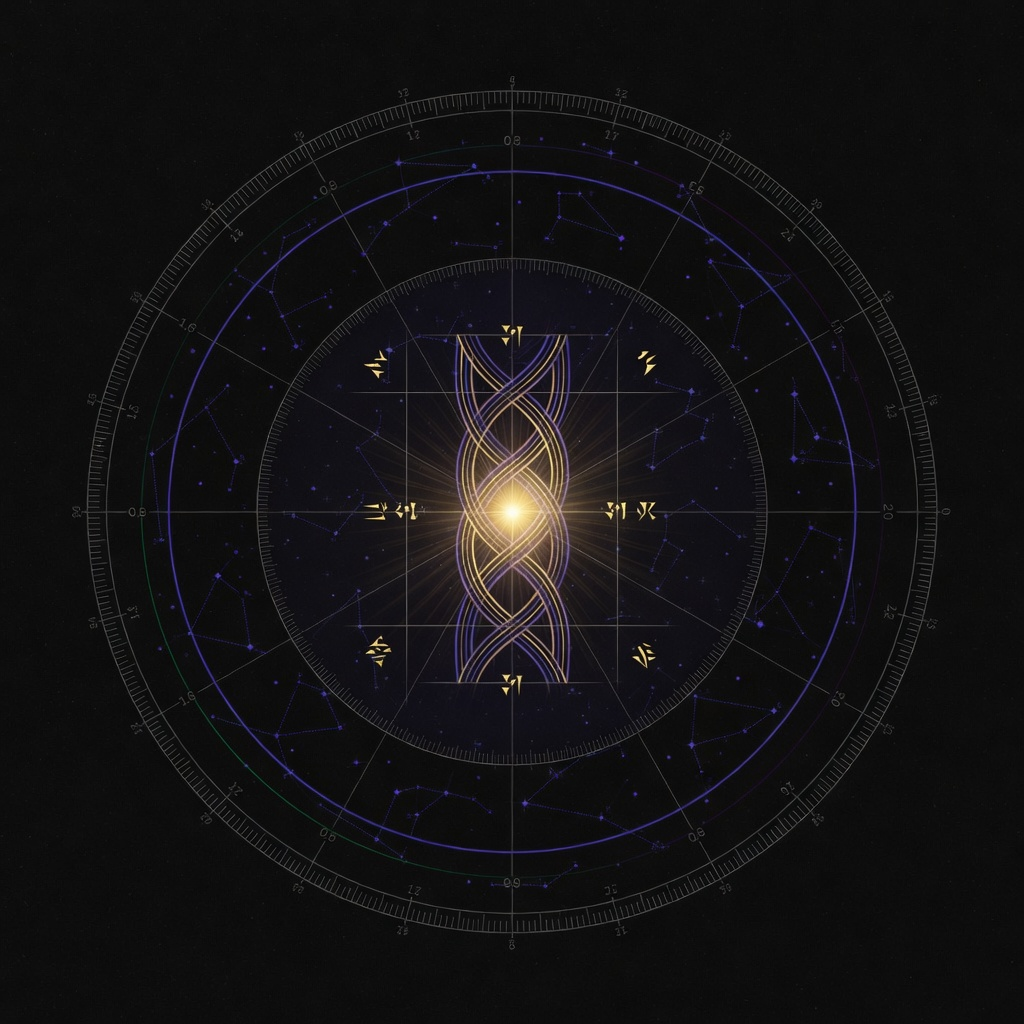
Redundancy preserves sequence. Interpretation remains answerable to the source. TN-LCD02.
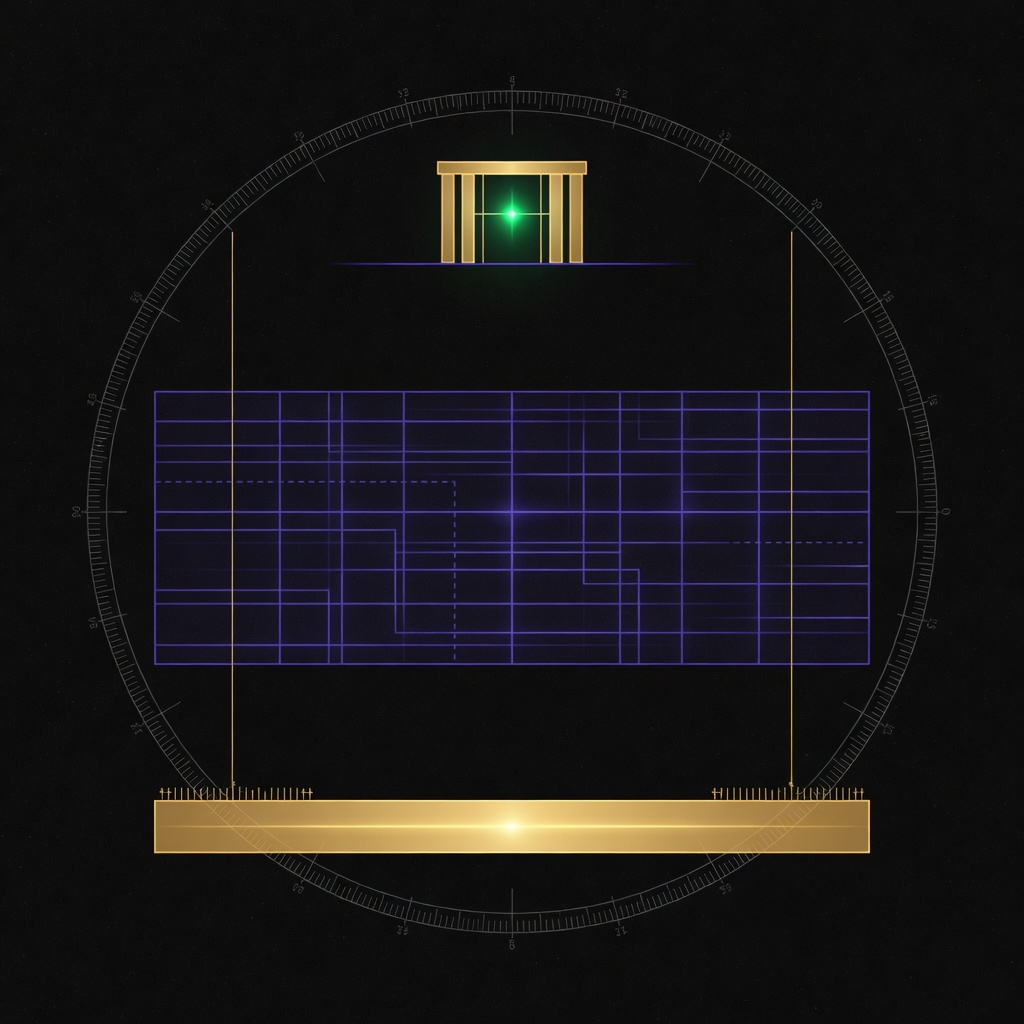
A contemporary design reading: separate durable commitments, working context, and an active human witness. TN-LCD03.
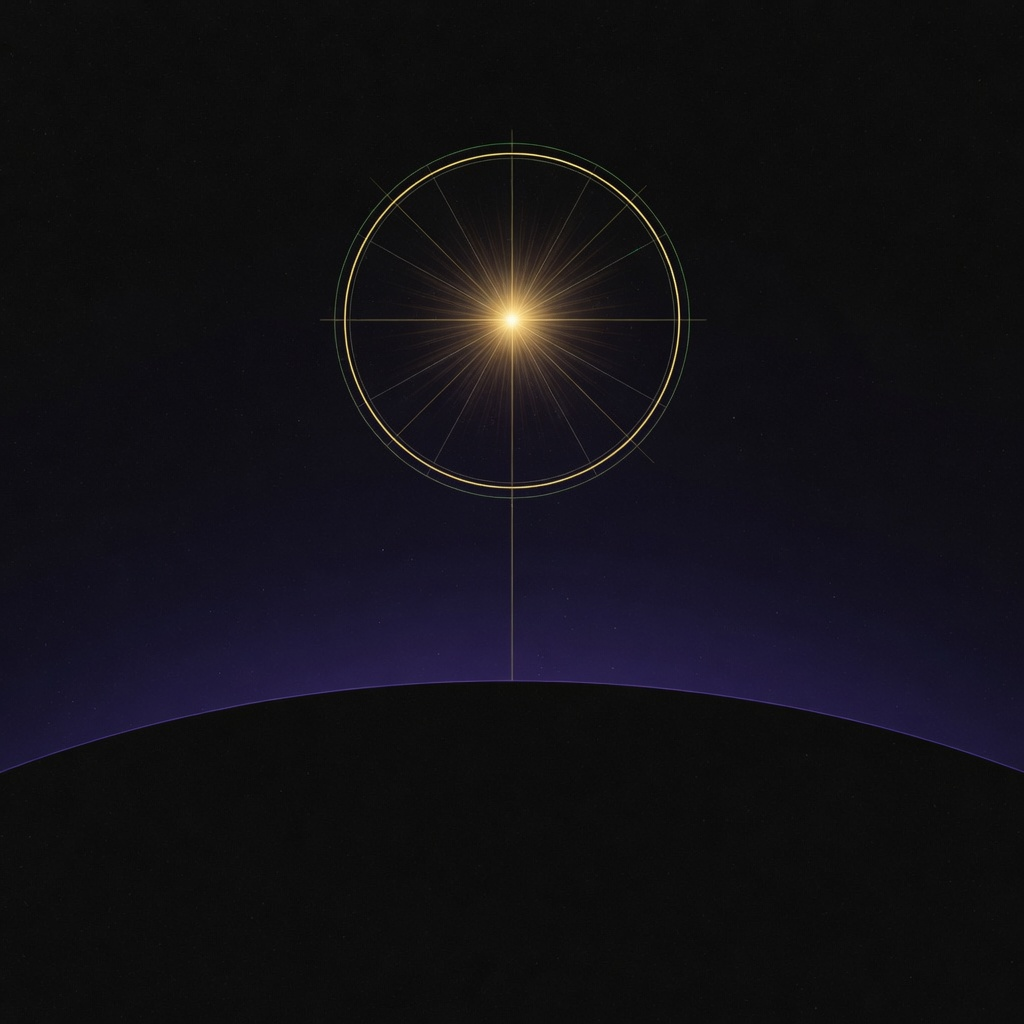
The closing constraint: preserve the source, revise the commentary, and return judgment to a living witness. TN-LCD04.